
LTX-2.5 License Explained: Commercial Use and Fine-Tune Rules
Understand the LTX-2.5 license, including the $10M revenue threshold, commercial use, fine-tuned models, redistribution, and attribution requirements.
The LTX-2.5 license became a major discussion topic shortly after the model's release. Open weights do not mean unrestricted use, and generating a video, operating a hosted service, and distributing a fine-tuned model can create different obligations.
This article summarizes the LTX-2.x Community License that applies to LTX-2.5 releases from August 11, 2026. It is an informational guide, not legal advice. Always review the current official agreement before making a production decision.
Can organizations under $10 million use LTX-2.5 commercially?
The official LTX-2.5 model page states that commercial and production use is available at no cost under the community license for entities with annual revenue below $10 million.
The threshold applies to the entity using the model, not simply to the revenue produced by one project. The complete license also considers subsidiaries, affiliates, and companies under common control when evaluating an entity.
Being below the revenue threshold does not remove the rest of the agreement. Users must still follow the use restrictions, distribution conditions, attribution requirements, and other applicable terms.
What happens at or above $10 million?
Under the official LTX-2.x Community License, commercial entities with annual revenue of at least $10 million must obtain a paid Commercial Use Agreement for commercial use of LTX-2.x or its derivatives.
Qualifying entities may still use the model for permitted non-commercial testing, evaluation, or research in a non-production environment. However, revenue-generating activity, an end-user-facing deployment, or training and fine-tuning for commercial use should not automatically be treated as non-commercial activity.
If your organization is close to the threshold, has several affiliated entities, or expects revenue to change during deployment, confirm the interpretation before launch rather than after the product is in production.
How are fine-tunes and LoRAs treated?
The license includes fine-tuned weights, LoRA adapters, adapted checkpoints, and other weight-derived models within its definition of Derivatives of LTX-2.x.
Creating a LoRA is not automatically prohibited, but the resulting adapter remains subject to the license. Distribution requires additional attention: recipients must be informed that the derivative is governed by the LTX-2.x terms.
A recipient that meets the commercial-entity threshold may need its own paid agreement before using the transferred fine-tune or adapter. The official LTX-2.5 model page also warns that transfer of fine-tunes may require a paid license.
This is especially relevant to marketplaces, client delivery, agency work, and training services. A model created by a smaller studio does not automatically carry the same free-use status to every company that receives it.
Can LTX-2.5 be offered through a hosted service?
The license permits remote-access hosting, including SaaS-style deployments, provided that the applicable conditions are satisfied.
Revenue thresholds, acceptable-use restrictions, attribution notices, and redistribution requirements still apply. Hosting the weights behind an interface does not remove those obligations.
If the product combines LTX-2.5 with third-party models, music, footage, training data, or user uploads, those materials may have separate terms. Compliance with the LTX license does not grant rights to unrelated assets.
What must be retained when distributing the model?
The license includes conditions for distributing LTX-2.x and its derivatives. In practical terms, prepare to:
- Include the applicable agreement and use restrictions.
- Notify subsequent users that the model or derivative remains subject to those terms.
- Retain relevant copyright, patent, trademark, and attribution notices.
- Clearly indicate modifications where required.
- Check the recipient's licensing position before transferring a derivative.
Do not reduce this to a single “commercial use allowed” badge. Distribution and transfer introduce obligations that do not appear when you only generate videos internally.
LTX-2.5 commercial-use checklist
Before using LTX-2.5 in a commercial product, verify:
- Annual revenue across the relevant entity and affiliates.
- Whether the model will affect or interact with end users.
- Direct and indirect monetization.
- Training, fine-tuning, or LoRA distribution.
- Required license and attribution notices.
- Compliance with the Acceptable Use Policy.
- Separate rights covering input data, music, footage, and other models.
Commercial usability was repeatedly highlighted in the model's Reddit release discussion. However, any production decision should rely on the current official license rather than a shortened community description of “free commercial use.”
If you plan to create or distribute a specialized adapter, pair this overview with the LTX-2.5 IC-LoRA guide. For model capabilities and workflow selection, start with LTX-2.5 DFR explained.
Skip the GPU setup. No local install, no VRAM tuning — paste a prompt and render an LTX-2.5 clip in the browser. Try it on ltx-23.org →
Author

LTX-2.5 Editorial Team
The editorial team behind the LTX model guides and workflows published on ltx-23.org.
Categories
More Posts

LTX-2.5 Low VRAM Guide: Can 8GB, 12GB, or 16GB Run It?
Learn the real LTX-2.5 VRAM requirements for 8GB, 12GB, and 16GB GPUs, including official guidance, low-VRAM workflows, and practical tradeoffs.
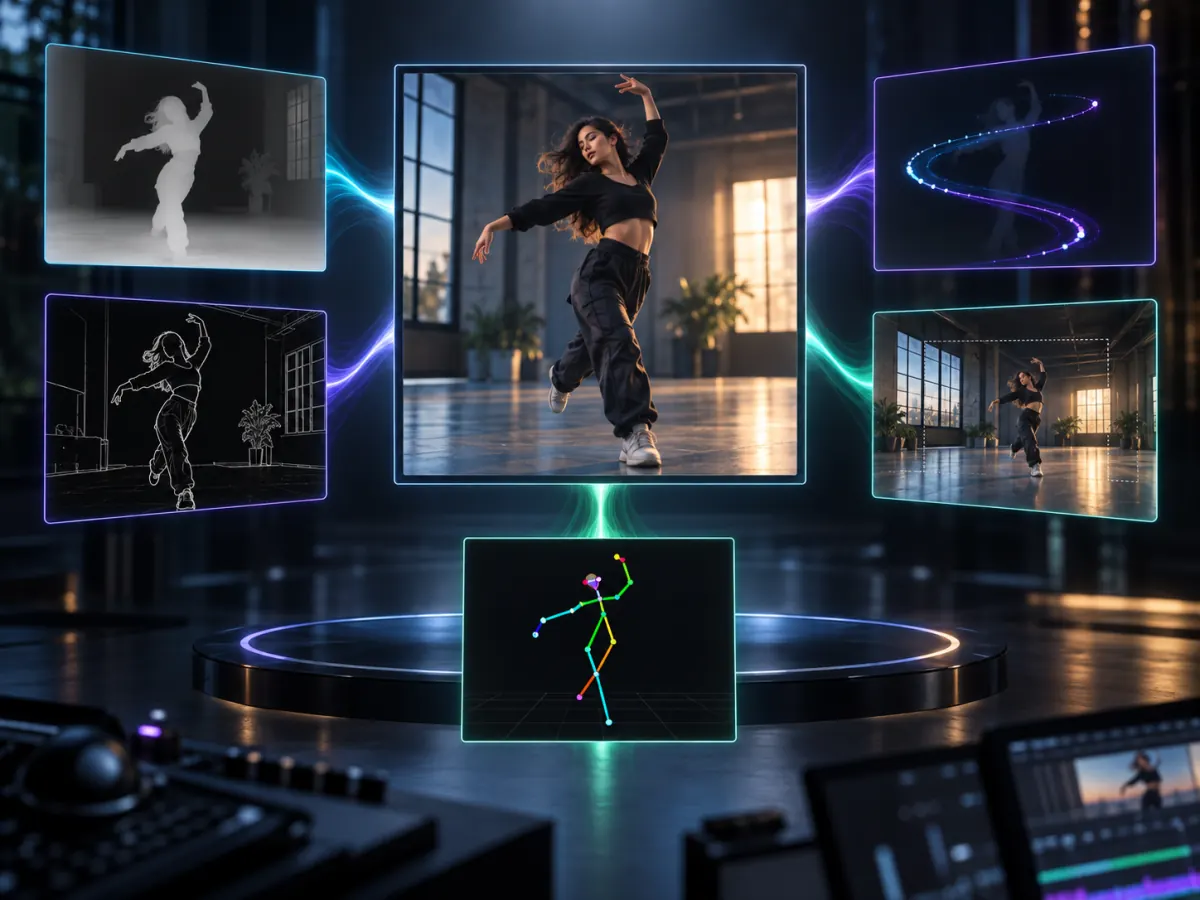
LTX-2.5 IC-LoRA Guide: Video Editing and Control in ComfyUI
Explore LTX-2.5 IC-LoRA workflows for pose control, motion guidance, inpainting, outpainting, consistent characters, and video upscaling.
Fixing LTX-2.3 Native Audio: How to Actually Get Perfect Lip Sync
Is your LTX-2.3 native audio producing horrible lip sync? Here are absolute fixes from Reddit to solve the audio resolution bug and Master Text-to-Video.